Tuesday, February 28, 2012

Grown So Ugly

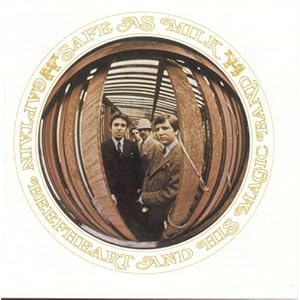
Grown So Ugly is a song that many of us have probably heard at least one version of. It was originally written and performed by Robert Pete Williams, and has since been covered numerous times, but there are two standouts. On the 1976 album, Safe As Milk, Captain Beefheart released a cover of Williams’ Grown So Ugly. This version of the song is nothing short of incredible. In 2004 The Black Keys released their 3rd album, Rubber Factory. This album contained yet another cover of Grown So Ugly. This version of the song is also lacking very little.

Williams’ original song has the feel of a traditional blues song, with the sound of an early blues recording. Like many blues songs, Grown So Ugly is as much, if not more, about the emotions attached to the song, as it is about the music in the song itself. Williams apparently spent a decent amount of time in prison, and this song is supposedly about how he felt once he was released.

If someone only had time to listen to one version of the song, Captain Beefheart’s version would be the one. The song is similar to Williams’, but with an additional twist added to it. He kept the structure of the song very close to Williams’ version. One of the main differences is in the vocals themselves. Williams has a something of a traditional blues voice, while Beefheart most certainly does not. The instrumentals are similar, but in a way, updated. There is no longer just an acoustic guitar and a man’s voice; in Beefheart’s version there is a full instrumental backing, consisting of guitars and drums. Despite the difference in the sound of the song, Beefheart kept the feel of the song nearly the same, with a hint weirder.
The Black Keys took a heavier approach to the song. It still feels like a blues song, but with much more of a Rock n’ Roll tone to it. This version has an additional energy it, which was not present in the original song. When listening, it is apparent that this is the same song that Williams sung years ago, but it has developed quite a bit since then. Another major difference is that Rubber Factory was a studio album, which means that all of their songs sound pretty clean. When Williams originally recorded the song, it was not only in a much less sophisticated environment, but also sounds like it was possibly recorded in something of an impromptu session. This is not to say that one version is necessarily better than the other. The Black Keys brought something new to a classic, and while one is a cover of the other, they really have to be viewed as two separate songs.

Grown So Ugly is an example of the development of music over the past fifty years. None of the versions of this song can claim the title of “the best,” but they all still deserve a listen.

Sunday, February 19, 2012

True Grit (2010)

The Coen Brothers’ True Grit is a great example of a modern take on a classic film. This 2010 remake of the 1969 classic renewed more than just another John Wayne story; it also brought back the timeless “Western” genre. The film managed to contain many aspects that made it feel like a traditional western, but it was done in such a way that it is unmistakably a contemporary film. Overall, the film does a pretty good job of embracing this classic genre, while still being relevant to today’s audiences.

One major aspect that sets this film out from other, more traditional, westerns is the look, due to the shooting format and post processing. True Grit was shot on Super 35mm film, and posted using a digital intermediate process. These two factors make for an extremely clean and precise image, something that was always missing from typical westerns. The DI process gives the filmmakers more options, as far as color correction, once they get into post, but in my opinion it was somewhat detrimental to this film. The images all look great, but the DI just lacks a certain something that makes the film stand out as a Western, and not just a movie about the west.

The score, on the other hand, is something that is fits very well with the Western genre. It truly has the feel of a classic western score. It is an original orchestral piece, composed by Carter Burwell, who composed the scores for many of the Coen brother’s films. The score is relatively slow through ought the film, but it never feels too slow, or like it doesn’t fit with the film. One part of the score that makes it feel more like a western is Burwell’s use of stingers and jabs. This was something that was very common in older western scores, but was frequently over used to the point that it drew the viewer out of the film. Comparatively, Burwell’s use is somewhat understated, in that the stingers don’t stand out too much, but they are apparent enough that they help with the tone of the film.

One part of the film that differed from the traditional western is the lack of a romantic interest within the film. In most westerns, the male lead has a female character that he is involved with, and sometimes bases decisions off of. This is one area where True Grit had nothing. There was a hint of romantic interest between Mattie (Hailee Steinfield) and LaBoeuf (Matt Damon), but it was quickly dismissed, and would not have been appropriate anyways, due to their drastic differences in age.

Another large difference was in the setting and time of year. The typical western seems to take place on a prairie, or desert, someplace where it is hot and dry. True Grit largely takes place in the winter, and in many of the exteriors there is snow. It is somewhat odd to think about a western where it is snowing, but in the film it seems entirely fitting. This difference is one that actually works very well with the film.

Sunday, February 12, 2012

Cave of Forgotten Dreams

Cave of Forgotten Dreams is nothing short of incredible. Kirk Honeycutt of The Hollywood Reporter stated “to call this movie fascinating is akin to calling the Grand Canyon large,” and he is absolutely right. In 2010, Werner Herzog released Cave of Forgotten Dreams, a feature-length documentary that literally explores the Chauvet Cave, in the South of France. The Chauvet contains the earliest known cave paintings, and is nearly inaccessible. To explain how incredible of a find this cave was, the first archeologists who explored it thought that the drawing were counterfeits, because they were in such prime condition. Soon after, carbon dating revealed that the paintings were in fact authentic. There is a moment in the film when a drawing of a Bison with 8 legs is being shown. The legs are staggered, to give the impression that it is running; a form of “proto cinema,” as Herzog puts it. This is just one example of the incredible content of this film.

Herzog is in no way new to filming in dangerous and difficult locations, from the rapids of Peruvian rivers, to the South Pole, but this was a new challenge, even for him. Inside the cave, the crew had to be limited to four people, including Herzog. They could only walk on two-foot wide platforms, that were spread through ought the cave, to ensure that no damage could occur. This meant that there were times when the crew had “no hiding places to get out of the shot.” They also were prohibited to use lights that gave off any heat, for this reason they used several battery powered LED panels. As if all of that wasn’t enough, the films producer, Erik Nelson convinced Herzog that the film should be shot in 3-D. For those not familiar with the process, 3-D film production typically requires two cameras, which are calibrated on a 3-D rig. This means twice the weight and twice the bulk of a typical motion picture camera. The majority of the film was shot on the Silicone Imaging SI-3D, a “single” camera specifically designed for three-dimensional imaging. There were times though where the SI was too large, and they had to shoot on Cannon DSLR’s, or even Flip cameras. Despite all of these difficulties, the film is nothing short of beautiful. To add to that, Ernst Reijseger composed an original score, comprised mostly of strings, that is nothing but appropriate for the film.

As much as Cave of Forgotten Dreams is about the Chauvet, it is also about the people working within it. The film does not simply take a one-sided, scientific approach, but rather a human one. Herzog wants to discover who the people were who were once in the cave, as much as he wants to find out who the people are who are now in the cave. No matter how you look at it, this is a film that should not be missed. Dana Stevens said “if you’re a member of the human race – you owe it to yourself to see this movie.” That about sums it up.

Sunday, February 5, 2012

The Heidelberg Project

The Heidelberg project is something that, in many ways, truly defines the spirit of the City of Detroit. It encompasses the relentless drive, inability to give up, and ability to see beauty in the unsightly, which make Detroit what it is.

Nestled in the heart of midtown, The Heidelberg Project is a public art piece that occupies roughly two city blocks, on Heidelberg Street (just south of Mack), between Ellery and Mt Elliot. In 1986 by local artist Tyree Guyton started the Heidelberg Project, partially to encourage arts education for Detroit youths. What exist snow are several (unoccupied) houses and several vacant lots, all decorated with various items that were once trash. The houses remain empty, but are now adorned with a plethora of colors and items. On the corner of Heidelberg and Mt. Elliot there is a sign that does not explain what the project is about, but rather explains the “restrictions” upon visiting. It explains that everything is copyrighted and that any images are only to be used for personal or educational reasons. The sign also reminds viewers that this is more than just a piece of public art, it is also the neighborhood to numerous families. One corner of the sign reads: “Please do not photograph residents. Especially children.”

Everything in the area is decorated; at least half a dozen houses and even more empty lots are filled with a unique form of “found art.” When one first comes onto the street, it is almost hard to believe that it is real. It is truly an incredible sight to behold. Even one house or one lot would be impressive, but the sheer magnitude of the project is certainly one of the more impressive parts of this immense piece of art.

Last year, the Heidelberg Project celebrated its 25th anniversary. It has seen many changes, including demolitions and additions to the project. Numerous houses that were once part of the project have since been destroyed, due to “city planning” under the supervision of then Detroit mayors Coleman Young, and later Dennis Archer.

One thing that is somewhat different about the Heidelberg project is that it is completely public. Not only can you come and go freely, but also you can go up and touch things, even leave a shoe in the infamous shoe oven. It is pretty miraculous to wander around inside this enormous art project, and not have limitations as to how close to anything you can get. It adds a deeper level of connection between the art and the viewer.

One could ask “The Heidelberg Project is nearly twenty six years old, how is it relevant to the modern art scene?” It is relevant because it is constantly changing. With some parts becoming old, and constant additions to others, the Heidelberg project is different every day. It is not a piece that was made twenty-six years ago, but rather a piece that is twenty-six years in the making. You will never see the same Heidelberg twice.