Wednesday, April 11, 2012

30 Rock

NBC's 30 Rock may not appear to be a show that pushes any so social limitations or is groundbreaking, but in some ways it is. Tina Fey's character, Liz Lemon, is one that gives a new and refreshing look into what a female character can be in a modern and mass produced sitcom. She may have some antics that are somewhat predictable in a female character on this type of a show, but at the same time she is powerful, in control, and (for the most part) thinks rationally.

For theses who are unfamiliar with the show, Liz is the head writer on a mediocre sketch comedy show for NBC. In each episode a problem eventually arises due to the other writers, the actors, or her boss, Jack (played by Alec Baldwin). Liz is almost always the one who is left to resolve these problems, and even though it sometimes takes a great deal of effort, she almost always is the key to the resolution. That is one way in which this show brings new life into the idea of the female comedic character. She is the strong point of the show. The show is based around her life and career. Not her as a woman, but rather as the head writer of a major network television show. For the majority of the show, the fact that she is a woman is almost an afterthought. It is something that is nearly irrelevant, except for in minor instances.

Jack is another interesting character when discussing gender roles in mass media, specifically the relationship between him and Liz. Despite the fact that he is technically in a higher position then her, Jack is frequently the irrational one and the one to come to outrageous conclusions, while Liz is the one that seems more "normal" and has thoughts that are more collected. Jack is portrayed as someone who worked his way up, but also had a large amount handed to him. Liz, on the other hand, did not have things handed to her. She had to work even harder to get to the place that she it at now. This is not to say that Liz is always reasonable, but no one on the show is.

To truly understand the gender roles in this show one must look at it in the given context. The show is not really based in reality. All of the characters are exaggerated, and at times irrational, but that's why people watch it. Obviously Liz's character does not realistically portray a well adjusted woman, but no character in the show is realistic or well adjusted. Taking into account the exaggerated world that the show takes place in, Liz is a relatively strong female character. She is independent and a substantial positive contributor to the show. She is constantly surrounded by incompetent men, but somehow manages to keep calm, and also fix the majority of the problems that arise on a daily basis.

Tuesday, April 3, 2012

My Reviews

Upon reading my first review for this class, I noticed a certain formality that seems to be less present in my later writings. The vast majority of what I had written previously had been various essays and term papers, which I have now learned, are developed differently than something like a review. In my early reviews I was not as conscious of the word count. It was fine to use several words in the place of one, because I was not used to having an exact word could that I had to be at. In later writings I have tried to get my points across in as few words as possible, while still retaining a certain level of formality.

In my early reviews there is a tendency to announce what is going to be written out in the following paragraph, as one would in a formal paper. This is something that I still struggle with, but it has gotten at least somewhat less noticeable in recent works. This is something that was learned from writing traditional essays, and things of that nature.

Many of the changes that I have made in my writing style have been difficult, because they go against what I have spent the majority of my academic career learning about. That is not to say that this new style of writing lacks any formality or properness, I am just writing for a different audience not than I have before. I believe that adopting this new style of writing will improve my writing as a whole, and that I will be a stronger writer for it.

Monday, March 19, 2012

Aqua Tower & Smurfit-Stone Building

The Aqua Tower is meant to mimic the movement of waves, blending man made structure and nature into one, nearly seamless, place of residence for those lucky enough to spend part of their day inside it. The building's core is a relatively simple design, but the balconies make the building what it is. They contain no sharp corners and transition from various depths, giving the facade it's oceanic properties, hence the name "Aqua." The Smurfit-Stone Building does not have the same intentions. It is meant to make a bold statement about the female form, not only on its own, but also in relation to the buildings that surround it. From the bottom it is a relatively average building for the downtown area of Chicago, but the top is what makes it stand out. The roof of the building is angled, to make what appears to be a slanted diamond shape out of the roof.

Both of these buildings are rather unique, but in different ways. The Aqua Tower is more modest and, to be truly appreciated, one must take a somewhat close look at the structure. The Smurfit-Stone Building is almost the opposite. It's uniqueness lies in it's basic shape and that is about it. Upon a closer look, no other major details become apparent. The Smurfit-Stone has become a Chicago icon, as one of the more distinguished elements of the city's skyline. It's diamond shape makes it instantly recognizable to both residents and tourists alike. The Aqua Tower, on the other hand, blends into Chicago's skyline. That is not to say that it is not still impressive. It's flowing exterior is refreshing in the surrounding blocks that are filled with jagged glass structures. The building is somewhat understated, but in a good way. It is not one of the recently built monstrosities that blocks the view of city goers, but rather a nice little gem of creativity to find in Chicago's bustling downtown.

One of the more interesting aspects of the two buildings are their designers and their corresponding design ideas. The Smurfit-Stone Building was designed by Sheldon Schlegman, a man, and it's shape is meant to mimic that of the vagina. The structure was built in 1984 and the designer thought that many cityscapes contained too many phallic symbols and that there should be more of a feminine presence in Chicago's skyline. The Aqua building, on the other hand, was designed by Jeanne Gang, a woman, and is not meant to be a symbol of femininity, but rather to breathe new life into a cluster of buildings that had, in some opinions, grown stale. The building finished construction in 2010. It is not meant to make a larger statement about femininity in today's culture (as the Smurfit-Stone is), it is meant to be pleasing to the eye and to give a larger presence of nature in a surrounding maze of concrete.

Monday, March 12, 2012

Dance With Snakes

Dance With Snakes addresses social issues involving politics and the media, in a way that makes you never want to set it down. On the surface, the book is violent and profane, but underneath all of that there is real substance that gets to the heart of the matter. In 1996 Horacio Castellanos Moya released this one-hundred and fifty-six page epic tale about death, identity, and snakes.

The main issue that the books addresses is the control that the media has over the majority of the population. Moya shows how people can get so wrapped up in what the media says, especially about devastating events, that they are willing to believe any explanation for what happened, even if there is none. One point where this is blatantly obvious is during the times when characters in the book are speculating about why these crimes are being committed and nobody can decide on an answer. Everyone gets so wrapped up in the justifications that they have created in their own heads, that it almost becomes more important that who is actually committing the crimes.

Another interesting idea that is brought up in Moya’s book is that modern culture is forcing people to become more introverted. Eduardo Sosa would be an extreme example of this. He has become so involved in his own world, and excluded from the outside that his main companions are snakes. His disconnection from society goes so far that he barely bats an eye when the snakes kill dozens of people right before him. It is highly unlikely that Moya wrote this without the intention of making society take a long hard look at itself and try to see what’s going wrong.

When any sort of serious discussion about this book occurs, one has to ask if Moya’s gratuitous violence is really the best way to address the given issues. It was a method that was certainly quite effective, but are there also drawbacks to introducing even more violent images into the media (mainstream or not)? It also begs the question of the light that the violence occurred in. It was certainly not portrayed as something positive, but there seemed to be a lack of negativity to it due to the fact that all of the violent acts are first described by the one committing them.

All of these factors lead to the question is Eduardo Sosa the hero or the villain. In the chapters told by Handal and Rita, he is the villain, or rather Jacinto Bustillo is the villain. The murder of Bustillo is really the only cirme that Sosa commits as himself. The rest he commits as Bustillo, or at least that is what he claims. The reader sees the majority of the story through his eyes, so it is difficult not to see him in a somewhat positive light, but at the same time, he commits such horrible crimes. The only answer is that he is somewhere in between. He is not a hero or a villain, but rather an individual who is telling the reader the story of his life.

Tuesday, February 28, 2012

Grown So Ugly

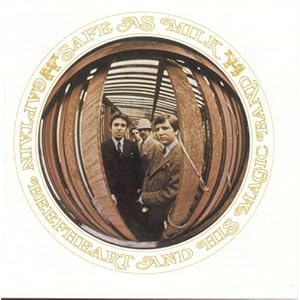
Grown So Ugly is a song that many of us have probably heard at least one version of. It was originally written and performed by Robert Pete Williams, and has since been covered numerous times, but there are two standouts. On the 1976 album, Safe As Milk, Captain Beefheart released a cover of Williams’ Grown So Ugly. This version of the song is nothing short of incredible. In 2004 The Black Keys released their 3rd album, Rubber Factory. This album contained yet another cover of Grown So Ugly. This version of the song is also lacking very little.

Williams’ original song has the feel of a traditional blues song, with the sound of an early blues recording. Like many blues songs, Grown So Ugly is as much, if not more, about the emotions attached to the song, as it is about the music in the song itself. Williams apparently spent a decent amount of time in prison, and this song is supposedly about how he felt once he was released.

If someone only had time to listen to one version of the song, Captain Beefheart’s version would be the one. The song is similar to Williams’, but with an additional twist added to it. He kept the structure of the song very close to Williams’ version. One of the main differences is in the vocals themselves. Williams has a something of a traditional blues voice, while Beefheart most certainly does not. The instrumentals are similar, but in a way, updated. There is no longer just an acoustic guitar and a man’s voice; in Beefheart’s version there is a full instrumental backing, consisting of guitars and drums. Despite the difference in the sound of the song, Beefheart kept the feel of the song nearly the same, with a hint weirder.

The Black Keys took a heavier approach to the song. It still feels like a blues song, but with much more of a Rock n’ Roll tone to it. This version has an additional energy it, which was not present in the original song. When listening, it is apparent that this is the same song that Williams sung years ago, but it has developed quite a bit since then. Another major difference is that Rubber Factory was a studio album, which means that all of their songs sound pretty clean. When Williams originally recorded the song, it was not only in a much less sophisticated environment, but also sounds like it was possibly recorded in something of an impromptu session. This is not to say that one version is necessarily better than the other. The Black Keys brought something new to a classic, and while one is a cover of the other, they really have to be viewed as two separate songs.

Grown So Ugly is an example of the development of music over the past fifty years. None of the versions of this song can claim the title of “the best,” but they all still deserve a listen.

Sunday, February 19, 2012

True Grit (2010)

The Coen Brothers’ True Grit is a great example of a modern take on a classic film. This 2010 remake of the 1969 classic renewed more than just another John Wayne story; it also brought back the timeless “Western” genre. The film managed to contain many aspects that made it feel like a traditional western, but it was done in such a way that it is unmistakably a contemporary film. Overall, the film does a pretty good job of embracing this classic genre, while still being relevant to today’s audiences.

One major aspect that sets this film out from other, more traditional, westerns is the look, due to the shooting format and post processing. True Grit was shot on Super 35mm film, and posted using a digital intermediate process. These two factors make for an extremely clean and precise image, something that was always missing from typical westerns. The DI process gives the filmmakers more options, as far as color correction, once they get into post, but in my opinion it was somewhat detrimental to this film. The images all look great, but the DI just lacks a certain something that makes the film stand out as a Western, and not just a movie about the west.

The score, on the other hand, is something that is fits very well with the Western genre. It truly has the feel of a classic western score. It is an original orchestral piece, composed by Carter Burwell, who composed the scores for many of the Coen brother’s films. The score is relatively slow through ought the film, but it never feels too slow, or like it doesn’t fit with the film. One part of the score that makes it feel more like a western is Burwell’s use of stingers and jabs. This was something that was very common in older western scores, but was frequently over used to the point that it drew the viewer out of the film. Comparatively, Burwell’s use is somewhat understated, in that the stingers don’t stand out too much, but they are apparent enough that they help with the tone of the film.

One part of the film that differed from the traditional western is the lack of a romantic interest within the film. In most westerns, the male lead has a female character that he is involved with, and sometimes bases decisions off of. This is one area where True Grit had nothing. There was a hint of romantic interest between Mattie (Hailee Steinfield) and LaBoeuf (Matt Damon), but it was quickly dismissed, and would not have been appropriate anyways, due to their drastic differences in age.

Another large difference was in the setting and time of year. The typical western seems to take place on a prairie, or desert, someplace where it is hot and dry. True Grit largely takes place in the winter, and in many of the exteriors there is snow. It is somewhat odd to think about a western where it is snowing, but in the film it seems entirely fitting. This difference is one that actually works very well with the film.

Sunday, February 12, 2012

Cave of Forgotten Dreams

Cave of Forgotten Dreams is nothing short of incredible. Kirk Honeycutt of The Hollywood Reporter stated “to call this movie fascinating is akin to calling the Grand Canyon large,” and he is absolutely right. In 2010, Werner Herzog released Cave of Forgotten Dreams, a feature-length documentary that literally explores the Chauvet Cave, in the South of France. The Chauvet contains the earliest known cave paintings, and is nearly inaccessible. To explain how incredible of a find this cave was, the first archeologists who explored it thought that the drawing were counterfeits, because they were in such prime condition. Soon after, carbon dating revealed that the paintings were in fact authentic. There is a moment in the film when a drawing of a Bison with 8 legs is being shown. The legs are staggered, to give the impression that it is running; a form of “proto cinema,” as Herzog puts it. This is just one example of the incredible content of this film.

Herzog is in no way new to filming in dangerous and difficult locations, from the rapids of Peruvian rivers, to the South Pole, but this was a new challenge, even for him. Inside the cave, the crew had to be limited to four people, including Herzog. They could only walk on two-foot wide platforms, that were spread through ought the cave, to ensure that no damage could occur. This meant that there were times when the crew had “no hiding places to get out of the shot.” They also were prohibited to use lights that gave off any heat, for this reason they used several battery powered LED panels. As if all of that wasn’t enough, the films producer, Erik Nelson convinced Herzog that the film should be shot in 3-D. For those not familiar with the process, 3-D film production typically requires two cameras, which are calibrated on a 3-D rig. This means twice the weight and twice the bulk of a typical motion picture camera. The majority of the film was shot on the Silicone Imaging SI-3D, a “single” camera specifically designed for three-dimensional imaging. There were times though where the SI was too large, and they had to shoot on Cannon DSLR’s, or even Flip cameras. Despite all of these difficulties, the film is nothing short of beautiful. To add to that, Ernst Reijseger composed an original score, comprised mostly of strings, that is nothing but appropriate for the film.

As much as Cave of Forgotten Dreams is about the Chauvet, it is also about the people working within it. The film does not simply take a one-sided, scientific approach, but rather a human one. Herzog wants to discover who the people were who were once in the cave, as much as he wants to find out who the people are who are now in the cave. No matter how you look at it, this is a film that should not be missed. Dana Stevens said “if you’re a member of the human race – you owe it to yourself to see this movie.” That about sums it up.